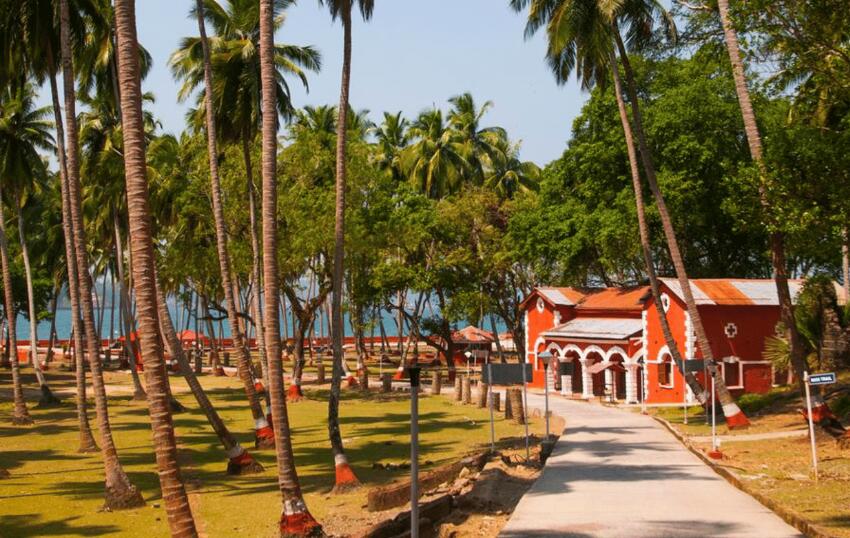
History of Ross Island
Named after British marine surveyor Sir Daniel Ross, this 0.3 sq km island served as the administrative headquarters of the British from 1858 to 1941. The island had a self-contained township with everything from a bakery to a printing press.
Architectural Ruins
1. Chief Commissioner's House
The grandest building with Italian tile work and ballroom. Now partially collapsed but still impressive.
2. Presbyterian Church
Built in 1905, only the shell remains with banyan tree roots engulfing the structure.
3. British Officers' Quarters
Rows of residential buildings showing different architectural styles.
4. Swimming Pool
The officers' pool, now filled with rainwater and inhabited by turtles.
5. Cemetery
Final resting place of British officers and their families with poignant epitaphs.
Japanese Occupation
During World War II (1942-1945), the Japanese occupied the island and built bunkers and war memorials. Some structures still bear bullet marks from Allied bombing.
Light and Sound Show
The evening show "The Saga of Ross Island" uses the ruins as backdrop. It tells the island's history from British settlement to Japanese occupation to abandonment.
Wildlife Encounters
The island is now home to spotted deer, peacocks, rabbits, and numerous bird species. The deer are friendly and often approach visitors.
Visitor Information
Ferry Timings: Every hour from Port Blair (9AM-4PM)
Entry Fee: ₹50 for Indians, ₹500 for foreigners (includes light show)
Duration: 3-4 hours recommended
Facilities: Basic cafeteria, drinking water, clean restrooms